
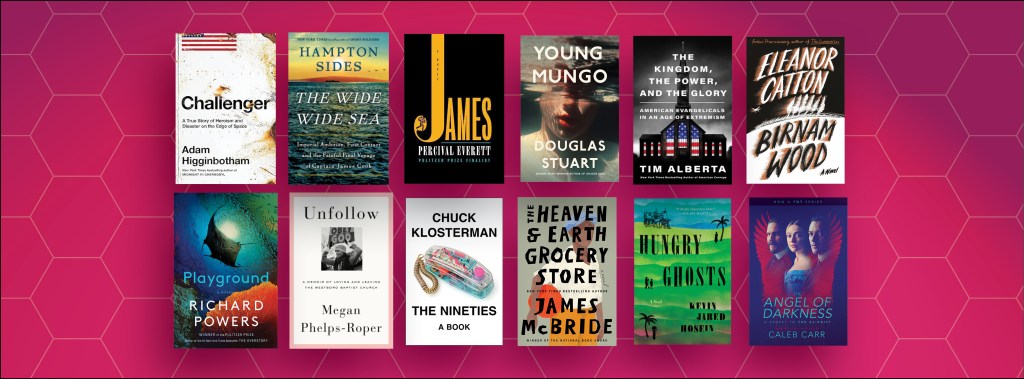
At the end of each year, I do a review reflecting on my personal favorite books I read in the past year. (See my full “My Year in Books: 2024” list on Goodreads.) I’ve picked my top 12 personal favorite reads from 2024. My goal was 45 books, but I managed to surpass my goal and read 50 books this year!
Top 12
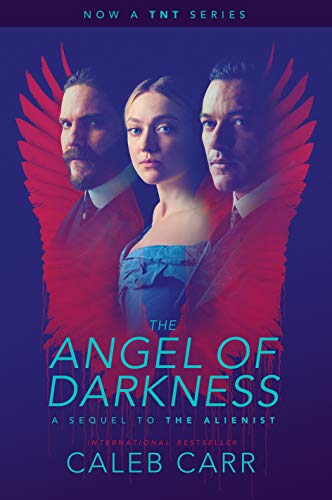
12. The Angel of Darkness by Caleb Carr. This is a sequel to The Alienist that continues the story of Dr. Laszlo Kreisler and his diverse set of detective cohorts in the early days of investigative forensics in turn-of-the-century New York City. It’s a grimy, sometimes gory, fast-paced whodunnit that is just fun to escape into.
“It isn’t really possible for men to understand how much the world doesn’t want women to be complete people. The most important thing a woman can be, in our society—more important, even, than honest or decent—is identifiable.”
—Caleb Carr, The Angel of Darkness

11. Hungry Ghosts by Kevin Jared Hosein. This is a complex and haunting story set in 1940s Trinidad about crossing class, religious, and cultural boundaries. I knew nothing about Trinidad or its history before reading this book, so it was part of the allure to read it. The story is immersive and often dark, but the characters and place come alive with Hosein’s poetic prose. All I can say is check it out.
“Even without a mouth, the woman can scream, she said. Even without a stomach, one can go hungry. And even in death, one can lust for life.”
—Kevin Jared Hosein, Hungry Ghosts
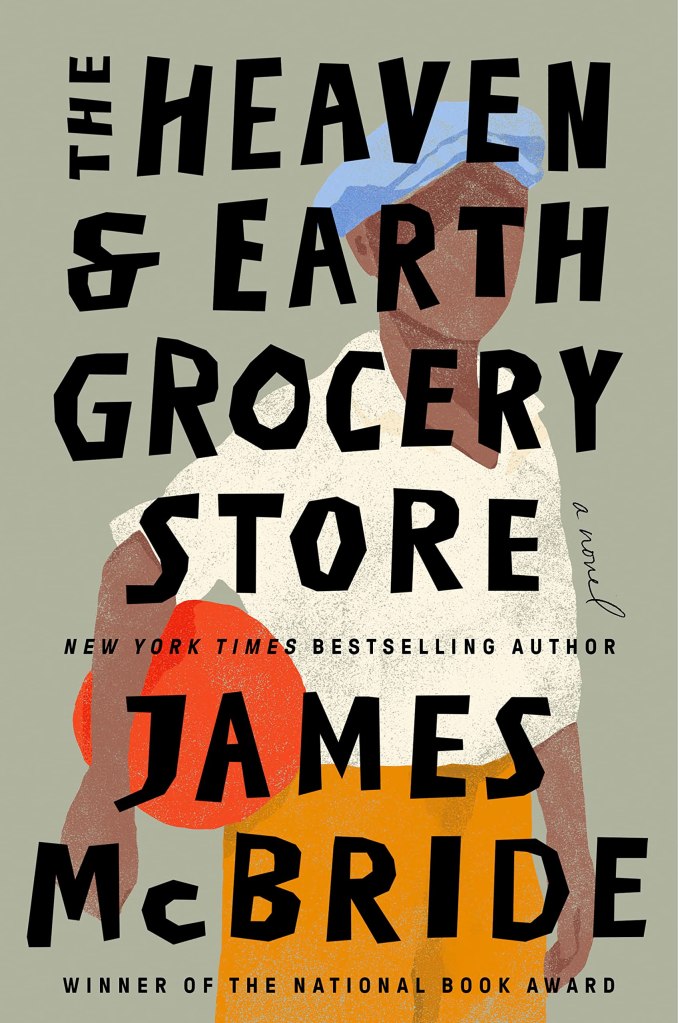
10. The Heaven & Earth Grocery Store by James McBride. I’ve previously read McBride’s The Good Lord Bird, and really enjoyed that one; this one was no exception. The novel tells the story of a community of Black and Jewish residents of Chicken Hill, Pottstown, Pennsylvania, in the 1920s and ‘30s—during the height of racial segregation—and the lengths they go to to protect and rescue an orphaned boy with special needs.
“Chona had never been one to play by the rules of American society. She did not experience the world as most people did. To her, the world was not a china closet where you admire this and don’t touch that. Rather, she saw it as a place where every act of living was a chance for tikkun olam, to improve the world.”
—James McBride, The Heaven & Earth Grocery Store

9. The Nineties: A Book by Chuck Klosterman. I loved this one for the pure nostalgia trip it was. Even though I was only a child during the 90’s, it was fun to read an in-depth analysis of the decade from someone who is a little older than me and had a more adult perspective on the decade that formed my earliest years—and to have a greater understanding of it now that the Nineties are more than two decades in the rearview mirror.
“No stories were viral. No celebrity was trending. The world was still big. The country was still vast. You could just be a little person, with your own little life and your own little thoughts. You didn’t have to have an opinion, and nobody cared if you did or did not. You could be alone on purpose, even in a crowd.”
—Chuck Klosterman, The Nineties: A Book

8. Unfollow: A Journey from Hatred to Hope (sometimes subtitled A Memoir of Loving and Leaving the Westboro Baptist Church) by Megan Phelps-Roper. This book tells the author’s personal story of being raised in—and eventual escape from—the Westboro Baptist Church (her grandfather was the founder), an infamously vile and hateful religious sect that has grabbed many headlines in recent American history. To me, beyond her personal journey to finding a new, more open worldview, Phelps-Roper had a lot of valuable insights about dealing with hate and division in our human relationships, in general, and holding our deepest convictions a little more loosely.
“Doubt was nothing more than an epistemological humility: a deep and practical awareness that outside our sphere of knowledge there existed information and experiences that might show our position to be in error.”
—Megan Phelps–Roper, Unfollow: A Journey from Hatred to Hope

7. Playground by Richard Powers. I just love how epic and sweeping Powers’ stories are; he doesn’t do “small” (at least not in the books of his that I’ve read). I previously read The Overstory and Bewilderment, both grand, sweeping tales. In this novel, four stories are interwoven into one, which has themes that question the arc of human progress, technology (particularly artificial intelligence), and our oceans. Even though it’s a big, sweeping story the characters feel personal and intimate, and it all comes together in an unexpected way.
“How inappropriate to call this planet Earth, when clearly it is Ocean.”
—Richard Powers, Playground
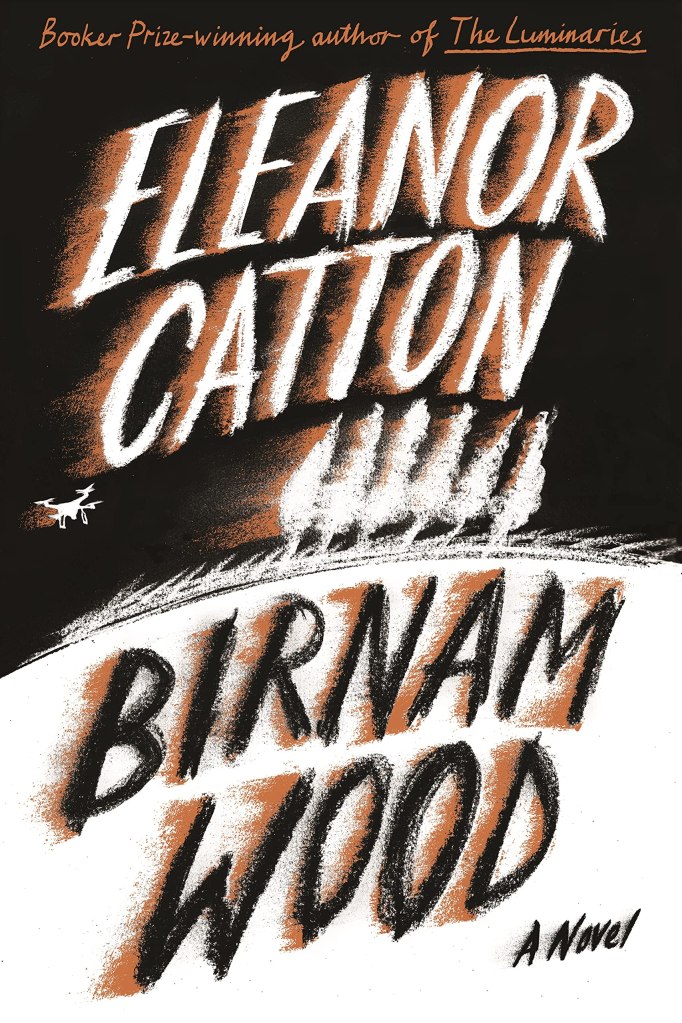
6. Birnam Wood by Eleanor Catton. This novel is set in New Zealand and tells a Shakespearean drama-level story about eco-activist Mira Bunting and her environmentalist collective called Birnam Wood (hence the allusion to Macbeth in the title and the group’s name), and the consequences when they get into bed with a deceptive billionaire who has other ends in mind. The book is packed with equal parts action and philosophy; I really enjoyed this thriller.
“. . . the real choices that you make in your life, the really difficult, defining choices, are never between what’s right and what’s easy. They’re between what’s wrong and what’s hard.”
—Eleanor Catton, Birnam Wood

5. The Kingdom, The Power, and the Glory: American Evangelicals in an Age of Extremism by Tim Alberta. Journalist Tim Alberta delves in to analyze America’s current extremely polarized political age through the lens of the American Evangelical church, and the deeply held role it has played in this country’s politics in the last decade (and last half century for that matter). This is an incisive, illuminating, and thorough examination of how politics and religion are complex and intertwined in our country with modern Christianity (for good or ill).
“True power is not reflected in kingdoms, administrations, or campaigns, because these things are counterfeits of God’s original, supreme authority. . . . Every biblical reference to power—every prayer, every reflection, every instruction— affirms that God is all-powerful, and that to the extent He vests that power in man, it is to proclaim God’s kingdom, God’s power, and God’s glory.”
—Tim Alberta, The Kingdom, The Power, and the Glory: American Evangelicals in an Age of Extremism
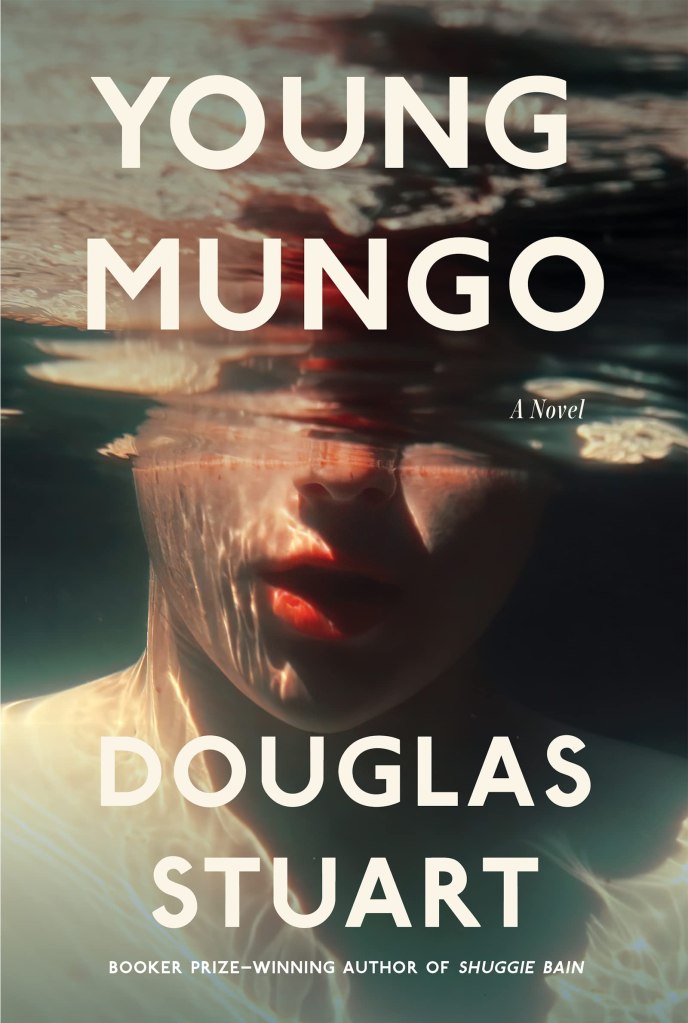
4. Young Mungo by Douglas Stuart. I had really enjoyed Stuart’s Shuggie Bain last year (though it didn’t make my top 12 list), and this novel has a similar vibe. It takes place in the early ‘90s in an impoverished part of Glasgow, Scotland, after Thatcherism. Mungo is a tender-hearted young boy who is gay and falls in love for the first time. He faces extreme violence and abuse for being who he is in this at-times gut wrenching story, but also shows resilience in his adversity. Stuart’s words are beautiful. (Be warned there are parts of this story that are very difficult to read.)
“Mungo’s capacity for love frustrated her. His loving wasn’t selflessness; he simply could not help it. Mo-Maw needed so little and he produced so much. So that it all seemed a horrible waste. It was a harvest no one seeded, and it blossomed from a vine no one tended.”
—Douglas Stuart, Young Mungo
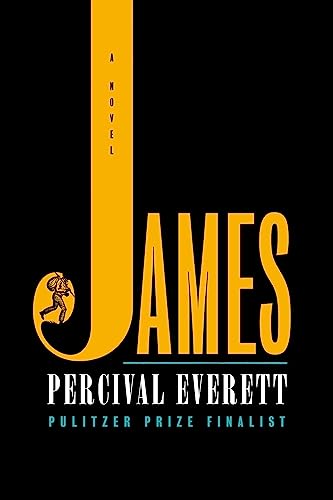
3. James by Percival Everett. This book turns Mark Twain’s Adventures of Huckleberry Finn on its head and retells it from the perspective of the enslaved Jim. That’s all you really need to know, but I thought it was brilliant. (Though, it may help to read Huck Finn sometime before it to get a refresher on the story—I hadn’t read it since high school.)
“At that moment the power of reading made itself clear and real to me. If I could see the words, then no one could control them or what I got from them. They couldn’t even know if I was merely seeing them or reading them, sounding them out or comprehending them. It was a completely private affair and completely free and, therefore, completely subversive.”
—Percival Everett, James
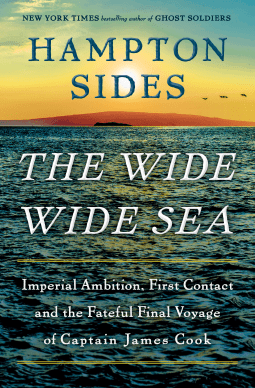
2. The Wide Wide Sea: Imperial Ambition, First Contact and the Fateful Final Voyage of Captain James Cook by Hampton Sides. Having traveled to various key places in Captain James Cook’s life—like Whitby (England), New Zealand, and the Pacific Northwest (USA)—just by happenstance, not necessarily specifically for him—I’ve always wanted to know a bit more about him since encountering so many historical plaques about him. This is a compelling account of Cook’s final voyage across the world’s largest ocean and (spoiler alert! . . . but not really if you know history) untimely death in Hawai’i. Sides does a marvelous job detailing all the historical viewpoints, records, and speculation about accounts of Cook’s life and death—as well as his crew and the consequences of imperialism, painting a well-rounded picture of perhaps the most famous European world navigator to have ever sailed. I love epic history books like this, especially when they tell history as smoothly as a novel like this one does.
“He wanted to go not only ‘farther than any man has been before me,’ he wrote, ‘but as far as I think it possible for man to go.’”
—Hampton Sides, The Wide Wide Sea: Imperial Ambition, First Contact and the Fateful Final Voyage of Captain James Cook
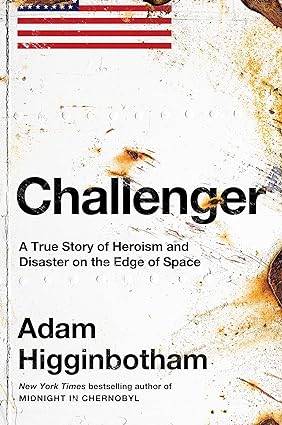
1. Challenger: A True Story of Heroism and Disaster on the Edge of Space by Adam Higginbotham. I have learned to RUN and pick up any Adam Higginbotham book after I read Midnight in Chernobyl a few years ago. (I think this is only his second book book—otherwise he was/is a feature writer for prestigious magazines.) So when I learned his account of the 1986 Space Shuttle Challenger disaster was coming out, I had to read it as soon as possible. It did not let me down. Higginbotham is the master of deeply-researched storytelling and what I like to call “disaster dissection”—especially for complex, science-adjacent stories with many moving pieces. This is a book that had me hooked from beginning to end, even though the “ending” is well known. Nothing else I read in 2024 topped this.
“To men and women across the United States, the almost ideal diversity of the Challenger crew—‘one of everything’—may have been enough to make the tragedy seem personal. . . . More than anything else, the poignant public death of the world’s first Everyman astronaut [Christa McAuliffe] made the loss of Challenger a shared tragedy: an instant-replay televised martyrdom in which everyone watching played a part.”
—Adam Higginbotham, Challenger: A True Story of Heroism and Disaster at the Edge of Space
* * *
Honorable Mentions:
Fiction:
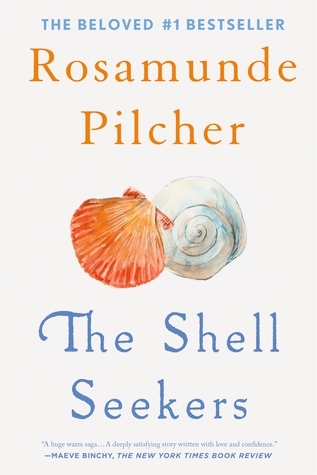
- The Shell Seekers by Rosamund Pilcher. The story of three siblings and their mother as they vie for the fate of their father’s most famous painting (eponymously titled), which is worth a small fortune. A bit melodramatic at times, but I still enjoyed it a lot.
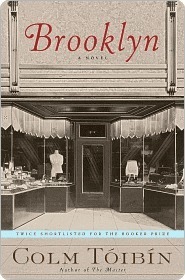
- Brooklyn by Colm Tóibín. About an Irish girl who moves to Brooklyn, New York, to start a new life. There’s a good movie with Saorise Ronan based on the book.
- The Zone of Interest by Martin Amis. This book has a totally disarming and unexpected view of the Holocaust and the horrors therein. It’s a love story wrapped in a story of total human depravity and evil—and the contradiction at the core of human nature.

Nonfiction:
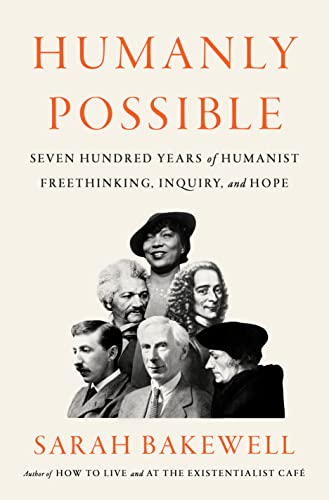
- Humanly Possible: Seven Hundred Years of Humanist Freethinking, Inquiry, and Hope by Sarah Bakewell. I loved Bakewel’s book on Montaigne (How to Live: Or A Life of Montaigne in One Question and Twenty Attempts at an Answer), and I learned a lot about humanist thinking and the key figures in its history from her easy-to-read historical summary.
- Knife: Meditations After an Attempted Murder by Salman Rushdie. I don’t think Rushdie has done much nonfiction (at least that I’ve read) but this account after his attempted assassination by a knife-wielding man was interesting and forthright.
- Fi: A Memoir of My Son by Alexandra Fuller. Plainly, I’ll forever read and love anything by Alexandra Fuller, especially after her beloved Don’t Let’s Go to the Dogs Tonight: An African Childhood (one of my all-time favorite memoirs). This is the heartbreaking story of the early death of her young son and the aftermath.


* * *
A few remaining categories . . .
- Series: In addition to completing the second Dr. Kreiszler book (The Angel of Darkness by Caleb Carr, #12 above), I read both of Colm Tóibín’s Eilis Lacey books (Brooklyn—honorable mentions, above—and Long Island). And, this is not a series per se, but I did also read 3 Oliver Sacks books: Gratitude, The Man Who Mistook His Wife for a Hat and Other Clinical Tales, and On The Move: A Life. I also read 2 more Mick Herron books: The Secret Hours (which is Slough House adjacent; a prequel) and Down Cemetery Road. . . . and part of a series is my worst, below . . .
- Worst (would not pick up again): Foundation by Isaac Asimov. I read this because I started watching the AppleTV+ show based on this series. I am aware that the show takes some major liberties and departs from the book a lot, but let me just say: I think the TV show is way better. The book is so dry and boring I couldn’t believe that the show was based on it.
- Most challenging: Zero at the Bone: Fifty Entries Against Despair by Christian Wiman. I don’t know if this book is best read in one sitting. It’s a mix of essay, poetry, and memoir, and some of it is very philosophical and enigmatic on first read. I think the words are meant to be savored more than I let them be. A lot of people said it was really good, and I did highlight a bunch of good passages, I just didn’t feel smart enough or in the right mood for it.
- Funniest: Straight Man by Richard Russo. Totally opposite of Foundation, I couldn’t finish the TV show based on this book, Lucky Hank with the inimitable Bob Odenkirk, but I did manage to finish this, the book it was based on. It was reasonably funny. Don’t know if I’ll still revisit the show later (I think I was just in a depression of not seeing Bob Odenkirk in Better Call Saul anymore.)
- Weirdest: Lud-in-the-Mist by Hope Mirrlees. This is a quaint fantasy/fairy story written in the 1920’s. I think Neil Gaiman said it was one of his favorites of all time—and that may be why I picked it up, but I just thought it was a bit of a slog. Not bad per se, just not good either.
* * *
What were some of your favorite books that you read this year? What should I read in 2025? I’d love to hear your recommendations.
 William I. Overbeeke